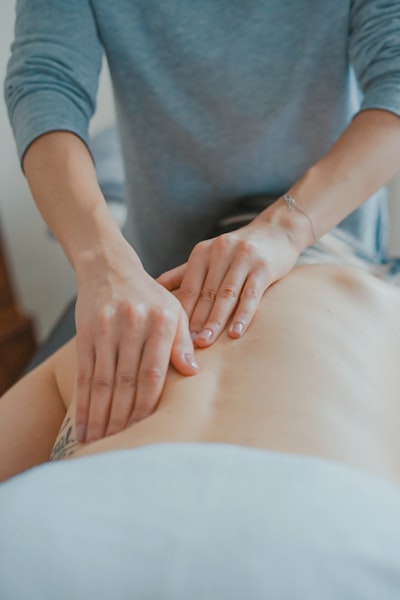
There's a moment that happens in certain sessions, a moment I've witnessed dozens of times and never tire of seeing. A client is on the table, the work is going deep, and something shifts. Their breath changes. It deepens, slows, opens. And with that breath, something held, sometimes for years, begins to release.
This is the magic of combining breathwork with therapeutic massage. And it's not mystical. It's physiological, psychological, and profoundly human.
"Breath is the one automatic function of the body we can consciously control, and that makes it the most powerful tool we have for healing."
Why Breath and Touch Belong Together
Most people think of massage as something that happens to the body, a passive experience where you lie still while someone works on your muscles. And while therapeutic massage is powerful on its own, adding intentional breathwork transforms it into something far deeper.
Here's why: your muscles hold tension in direct relationship to your nervous system. When your nervous system is in a state of stress, even subtle, chronic, background stress, your muscles stay contracted. They brace. They protect. And no amount of physical manipulation fully releases them while that underlying signal remains.
Breath changes the signal.
Slow, conscious, diaphragmatic breathing activates the parasympathetic nervous system, your body's "rest and digest" mode. It tells your nervous system: you are safe. You can let go. And when that message lands while skilled hands are working a tight shoulder or a guarded lower back, the release that follows is incomparable to what either approach achieves alone.
The Science Behind the Combination
This isn't just intuition, the research is clear and growing:
- Controlled breathing reduces cortisol, the primary stress hormone, within minutes. Lower cortisol means less muscular bracing, less pain sensitivity, and faster tissue recovery.
- Deep breathing increases vagal tone, the activity of the vagus nerve, which governs your body's relaxation response. Higher vagal tone is associated with better emotional regulation, lower inflammation, and improved sleep.
- Massage increases oxytocin and serotonin while reducing adrenaline. Combined with the cortisol-lowering effect of breathwork, the neurochemical environment created in a combined session is profoundly healing.
- Trauma and tension are stored in the body, this is now well-established in somatic psychology. Breathwork creates a safe passage for that stored tension to move, while therapeutic touch provides the physical medium for release.
Studies on combined somatic therapies consistently show greater reductions in anxiety, chronic pain, and stress markers than either massage or breathwork alone. The combination produces what researchers call a "synergistic effect", the whole is measurably greater than the sum of its parts.
What It Actually Feels Like
I want to describe this honestly, not as a sales pitch, but as a human experience that I've had the privilege of witnessing and facilitating.
When we begin a session that incorporates breathwork, I'll often guide you into a simple breathing rhythm first. Nothing complicated, just an invitation to breathe more fully than you probably have all day. Most people, when they first try this, are surprised by how shallow their normal breathing has become. We live in a culture of chronic tension, and shallow breathing is one of its most common symptoms.
As the breath deepens, I begin to work. And what I notice, what you will notice, is that areas of the body that were resistant start to soften. Not because I pushed harder, but because the system underneath relaxed its grip.
Some people feel warmth spreading through areas that always felt cold or numb. Some feel emotion moving, not overwhelming, just present, like something that needed to be acknowledged finally getting its moment. Some simply feel a quality of peace they haven't touched in years.
"I didn't know my body could feel this way. I forgot what it was like to not be bracing against something."
The Unknown Benefits, What Nobody Talks About
The known benefits of combined breathwork and massage are well documented, pain relief, stress reduction, improved sleep, better range of motion. But there are subtler gifts that don't make it into the research papers.
Reconnection with your own body. Many people live almost entirely in their heads, thinking, planning, worrying, scrolling. The combination of breath and touch brings you back into your physical self in a way that's both grounding and revelatory. You remember that you have a body. That it has needs. That it deserves attention.
A reset of your baseline. After a few sessions, clients often report that their "normal" has shifted. What used to feel like a manageable level of tension now feels like too much, because they've experienced something better. Their nervous system has learned a new setting.
Emotional clarity. The body stores what the mind avoids. As physical tension releases, people often find themselves thinking more clearly, feeling more themselves, making decisions with less internal noise. This isn't a side effect, it's a direct result of the body-mind connection that breathwork and massage both address.
A different relationship with stress. Regular sessions don't just reduce stress in the moment, they change how you respond to stress over time. Your window of tolerance expands. Things that used to tip you over the edge feel more manageable. You develop a somatic resource, a felt sense of calm that you can return to.
How I Integrate This in My Sessions
At Sagi Wellness, breathwork isn't an add-on, it's woven into the fabric of how I work. Every session begins with a moment of intentional breath, helping you arrive fully rather than carrying the day's tension straight onto the table.
Throughout the session, I may offer simple breath cues, an invitation to breathe into an area of restriction, to exhale as I work through a point of tension, to use the breath as a tool rather than holding it unconsciously (which most people do without realizing).
This is especially central to My Sagi Special, my signature 90-minute session where I draw on the full range of therapeutic techniques I've developed, weaving massage, breathwork, and mindfulness into a single cohesive experience tailored entirely to you.
Who This Is For
The combination of breathwork and massage is beneficial for almost everyone, but it's particularly transformative for:
- People carrying chronic stress or burnout, who feel like they've forgotten how to relax
- Those with chronic pain or tension that hasn't responded fully to massage alone
- Anyone going through major life transitions, grief, change, uncertainty, where the body needs support alongside the mind
- People who feel disconnected from their bodies, who live primarily in their heads
- Those seeking preventive care, using wellness proactively rather than waiting for breakdown
You don't need to be in crisis to benefit. In fact, the people who benefit most are those who come regularly, building a practice rather than seeking a fix.
The breath has always been there, waiting to be used. The body has always been ready to release. Sometimes all it takes is the right space, the right hands, and the right intention, and healing begins in that very moment.
. Sagi